How to Explain Modern SEO to Non-SEOs in 2026
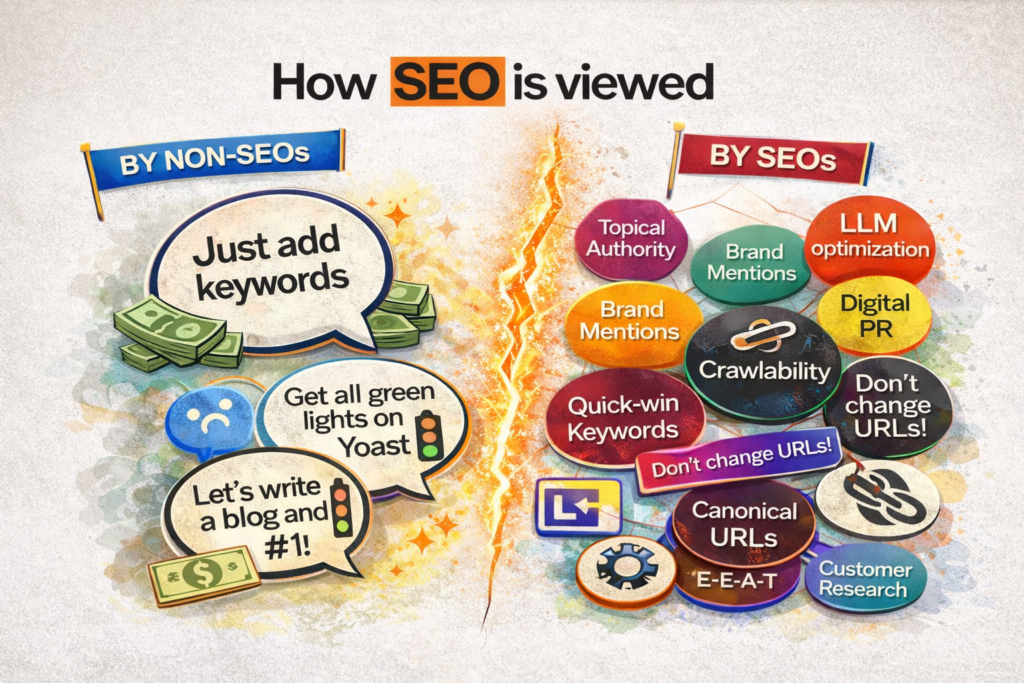
Non-SEOs:
“Why is this taking so long to rank?”
SEOs:
opens 24 tabs, Search Console, log files, and spreadsheets…
If you work in SEO, you’ve probably faced this question many times. To someone outside the field, SEO can seem simple: add keywords, build some backlinks, and rankings should come. But in 2026, SEO is no longer a quick-fix strategy. It has evolved into a long-term, multi-layered discipline that blends content, technology, user behavior, and brand trust.
So how do you explain this complex process to someone who just wants results?
Let’s break it down in a way non-SEOs can understand.
SEO Is No Longer Just Keywords and Backlinks
There was a time when SEO success depended heavily on inserting keywords and getting as many backlinks as possible. That era is gone.
Today, search engines are smarter. They don’t just read words — they understand context, intent, structure, and credibility. Ranking now requires building a strong digital presence across multiple areas, not just optimizing a few pages.
Modern SEO focuses on these core pillars:
1) Understanding Intent, Not Chasing Volume
It’s not about targeting the most searched keyword anymore. It’s about understanding what users actually want.
For example, someone searching “best video editing services” may want:
- Price comparisons
- Portfolio examples
- Trust signals
If your content doesn’t match that intent, it won’t rank even with high search volume.
2) Building Topical Authority
Search engines now reward websites that consistently cover a topic in depth.
Instead of writing one article about SEO, successful sites:
- Publish multiple related articles
- Cover beginner to advanced topics
- Show expertise over time
This signals authority and trust.
3) Crawlability & Clean Indexation
If search engines can’t properly access and understand your website, rankings will suffer.
This includes:
- Clean technical structure
- Proper indexing
- No duplicate or broken pages
It’s the foundation most people never see.
4) Site Structure That Scales
A well-organized website helps both users and search engines navigate content easily.
Strong structure means:
- Clear categories
- Logical internal linking
- Pages that support each other
This makes growth sustainable.
5) Content Depth Over Content Quantity
Posting daily content doesn’t guarantee results anymore.
One well-researched, in-depth article can outperform 20 low-quality posts. Search engines prioritize value, expertise, and usefulness.
6) Real Experience Signals (E-E-A-T)
Search engines now evaluate:
- Experience
- Expertise
- Authority
- Trust
This means real insights, real examples, and authentic content matter more than generic writing.
7) Brand Mentions, Not Just Links
Even when websites mention your brand without linking, it still builds credibility.
Search engines see these signals as proof that:
- People know your brand
- People talk about your business
- Your authority is growing
8) Technical Consistency Matters
Technical health plays a major role in SEO performance.
This includes:
- Fast loading speed
- Stable page layout
- Clean backend structure
Small technical issues can slow growth significantly.
9) Entity Clarity for AI Systems
Search engines and AI systems now try to understand:
- Who you are
- What your business does
- What topics you specialize in
The clearer your identity, the easier it is to rank for relevant searches.
10) Playing the Long Game, Not Shortcuts
SEO is no longer about quick wins or hacks.
Sustainable SEO means:
- Consistency
- Patience
- Strategy
The results are slower — but much stronger and longer lasting.
How Do You Explain SEO to Non-SEOs?
A simple way to explain it:
SEO is like building a reputation online. You don’t become trusted overnight. You earn it by consistently showing expertise, improving your website, and helping users.
Instead of saying:
- “We’re building backlinks”
You can say:
- “We’re strengthening your online authority.”
Instead of:
- “We’re optimizing keywords”
Say:
- “We’re making sure your website answers what customers are actually searching for.”
SEO in 2026 is a totally different beast.
It’s not a single task.
It’s not a one-time setup.
And it’s definitely not instant.
It’s a combination of strategy, content, technical strength, and trust-building — all working together over time.
That’s why when someone asks,
“Why is this taking so long to rank?”
The honest answer is:
“Because we’re not just ranking pages. We’re building authority.”